





Most crypto casinos hold what is known as an offshore license. That means the license is issued in a different country than where most of the players sit. The Curaçao Gaming Authority (CGA) and the Anjouan Gaming Authority are two of the most common issuers in the crypto casino space. A third route, common but often misunderstood, is registration in Costa Rica. Costa Rica does not actually issue gambling-specific licenses, operators register there as data-processing companies under a Data Processing License instead.
Why crypto casinos hold a license
Most crypto casinos are licensed somewhere. The jurisdiction varies, and so do the rules and obligations that come with it. The reasons operators choose to be licensed at all come down to a handful of practical pressures.
Payment-network requirements
Visa, Mastercard, PayPal and most other payment networks will not integrate with an unlicensed gambling operator. They also impose anti-money-laundering and counter-terrorism-financing rules that an unlicensed site cannot satisfy.
Without a license: card networks are off the table, but cryptocurrency payments can still flow because they sit outside the bank-and-card framework.
Game-provider requirements shape the catalog
Studios like NetEnt, Evolution and Pragmatic Play have their own licensing rules for the casinos that want to host their content. A crypto casino without an accepted license can be locked out of major catalogs.
In practice, casinos with a Curaçao license tend to offer a wider game library than those with only an Anjouan license or a Costa Rica registration. A casino that wants live tables from Evolution generally needs an established license, otherwise it falls back on smaller, less recognized studios.
Without a license: the catalog narrows to studios that do not enforce licensing requirements, which usually means lesser-known and less-tested games.
Player-side trust signals
A recognized license is also a trust signal for players. The CGA, for example, requires casinos to certify their random number generators (RNGs) before going live. That is a basic but real consumer-protection layer.
Without a license: there is no external check on whether the casino actually follows its own rules. The player is trusting the operator on its word alone.
Corporate-law obligations
A casino is a business. The company behind it has to be incorporated somewhere, pay tax somewhere, and follow that country's commercial laws. Those laws often require a gambling license, or in the Costa Rica model, a data-processing permit covering online operations.
Without a license: the operation can fall outside the legal framework of its host country, with the legal exposure that follows.
Why offshore licenses dominate crypto
Offshore licenses are issued mainly by small countries and autonomous territories. Curaçao is the textbook example, an autonomous country within the Kingdom of the Netherlands.
For these jurisdictions, licensing online gambling has become a stable export industry. By tailoring the rules and the administrative process to crypto-native operators, they have built an export revenue stream around crypto gambling that EU regulators have not chosen to compete with. Offshore licenses are also significantly cheaper and faster to obtain than EU equivalents.
The sections below cover how the Curaçao, Anjouan and Costa Rica frameworks actually work, and what separates them.
Curaçao, the most common license
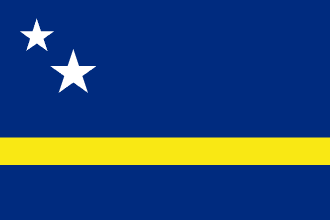
Curaçao is a small Caribbean island (444 km², about 171 square miles) north of Venezuela and just south of Aruba. It is autonomous, with its own government and legislation, but defense and foreign policy stay with the Netherlands.
How the Curaçao Gaming Authority works
The Curaçao Gaming Authority (CGA) is the regulator that issues gambling licenses to casinos, sportsbooks and lotteries operating from Curaçao. The framework lives in the Landsverordening op de Kansspelen (LOK), the National Ordinance on Games of Chance, in force since December 24, 2024.
What it takes to qualify
Under LOK, every operator now needs its own license issued directly by CGA. That is a clean break from the pre-2025 model, where master licenses with sub-licenses were the norm.
To qualify, a company first has to be incorporated in Curaçao. It needs a physical address and, in most cases, a local representative such as a board member. It also has to hold a bank account capable of receiving and sending payments.
Specialist firms exist to handle the company setup, the licensing paperwork and the local-representative role. iGaming Express is one example, with stated turnaround times of a few weeks.
The application requires detailed disclosure: the planned game catalog, security measures, and compliance procedures. Among the requirements:
- Clear terms and conditions on the website
- A clear responsible gambling policy
- Proof that the company owns its domain
- At least one server hosted in Curaçao
- Anti-money-laundering (AML) and counter-terrorism-financing (CFT) protocols
- Random number generator (RNG) certification
- Geographic and per-player restrictions documented in code
Why operators pick Curaçao
A Curaçao license is meaningfully cheaper, faster and less prescriptive than an EU license. That alone is enough for most crypto-native operators.
It is also a real license. The framework is documented, the regulator is identifiable, and the industry treats it as a credible counterparty. That makes it easier for a casino to keep card payments running than under an unlicensed or thinly regulated alternative.
It is, however, one of the more expensive offshore options. In real terms, only larger and more established crypto casinos opt in. That cost barrier doubles as a quality filter.
According to egamingservices.com, the post-2025 framework has improved transparency and industry acceptance materially compared to the pre-LOK regime.
Crypto casinos with a Curaçao license:
Restricted countries under a Curaçao license
Casinos licensed in Curaçao usually publish a list of countries from which players are not allowed to register. The list typically covers:
- Curaçao
- United States
- United Kingdom
- Germany
- Netherlands
- France
- Australia
The casino can operate from Curaçao and serve other markets, but it cannot market to Curaçao residents themselves.
Anjouan, cheaper but lighter on regulation
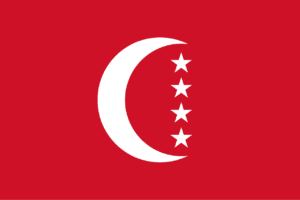
Anjouan is one of the islands that make up the Comoros, an archipelago in the Indian Ocean between Madagascar and the East African coast.
The Comoros has been an independent country since 1975. The individual islands have a degree of autonomy but are not separate sovereign states.
How the Anjouan license works
Licenses are issued under the Computer Gaming Licensing Act 007 of 2005 by Anjouan Gaming Licensing Services Inc. Holders can offer poker, sportsbooks and casino content. Three license types are available:
- B2C: the operator offers games directly to consumers.
- B2B: the operator supplies tech, software or game content to other casinos.
- B2B Recognition Certification: equivalent rights to the B2B license, but granted on the basis of an existing foreign B2B license.
The Anjouan framework allows operators to run a casino, but it leaves KYC, AML, CFT and geo-blocking to the operator itself. There is no active supervisory body day-to-day. In practice, the discipline comes from game providers and payment partners, not from the regulator.
Crypto casinos with an Anjouan license:
Restricted countries under an Anjouan license
Operators with Anjouan licenses typically geo-block markets such as:
- United States
- United Kingdom
- Netherlands
- France
- Spain
- Austria
- Germany
- The Comoros (and therefore Anjouan)
Some players try to bypass these blocks by playing through a VPN. That is risky. It usually breaches the casino's own terms of service and can void winnings if detected.
Costa Rica, registration instead of a license
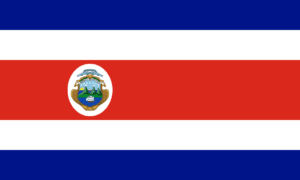
Costa Rica sits in Central America, south of Nicaragua and north of Panama.
No gambling license, but a workable registration
Costa Rica has no agency that specifically issues gambling licenses. Online betting and casino businesses fall under the country's general commercial laws instead. Operators that say they “hold a Costa Rica license” are usually referring to a Data Processing License (Licencia de Procesamiento de Datos).
What the Data Processing License covers
The Data Processing License is issued primarily by the Ministry of Economy, Industry and Commerce (MEIC). It is a general commercial permit that lets a company offer data and IT services from the country. The same license type covers, for example, web hosting providers.
Crypto casinos registered in Costa Rica:
Local representation is required
The application is open to companies registered in Costa Rica that have a local representative on file. Specialist firms cover that role for foreign operators, the model is called “representante de casas extranjeras” and it is a well-established arrangement.
Restricted countries with a Costa Rica registration
Because Costa Rica does not run a dedicated gambling regulator, it does not impose its own jurisdictional restrictions on operators. The only constraints from the Costa Rica side are general criminal-law obligations (anti-money-laundering, counter-terrorism-financing).
Operators still geo-block specific countries, but for reasons that come from those countries' own laws, not from Costa Rica:
- Costa Rica. Companies can be registered in Costa Rica and serve players abroad, but they cannot market to Costa Rica's own residents. This is a common pattern in similar jurisdictions, including Panama and the Philippines.
- United States. US federal law restricts offshore operators from serving US-based players, regardless of where the operator is registered.
- EU member states. Some operators block EU players preemptively because individual EU countries enforce their own licensing regimes.
In all of these cases, the restriction is downstream of foreign law, not Costa Rica law.
KYC follows the same logic. Costa Rica registration does not require it, but most operators run KYC anyway because their banking and payment partners demand it.
Curaçao, Anjouan and Costa Rica side by side
| Costa Rica | Anjouan | Curaçao | |
|---|---|---|---|
| Regulator | None for gambling specifically | Anjouan Gaming Authority | Curaçao Gaming Authority (CGA) |
| License type | Data Processing License | iGaming license, B2C and B2B | iGaming license, B2C and B2B |
| AML / KYC requirements | Self-regulatory | Standard KYC and AML required | Comprehensive KYC and AML compliance under CGA rules |
| Industry acceptance | Lower, often viewed as the lightest framework | Mid-tier and growing | Established, broad industry acceptance |
| Cost | Low | Low to mid | Mid to high |
| Market restrictions | Restricted in tightly regulated markets | Restricted in tightly regulated markets | Wider international acceptance, with carve-outs for the US, parts of the EU and others |
| Player protection and audit | Weak, no active supervision, self-regulation is the norm | Stronger than Costa Rica but lighter than EU regimes | Multiple formal audit and security obligations |
| RNG and technical certification | No formal requirement | Basic technical requirements, RNG certification common | Established technical requirements including penetration testing and RNG certification |
Where this leaves you as a player
A license tells you which rules a bitcoin casino operator has signed up to follow. It does not, on its own, tell you the casino is right for you. Curaçao under LOK is the most established of the three, Anjouan is lighter but workable, and Costa Rica is closer to a business registration than a gambling regulator.
Match the framework to the kind of game you want to play. Live casino content from major studios usually requires a Curaçao or stronger license to be available. Niche crash games, originals and provably fair titles are more common at Anjouan and Costa Rica operators.
Online gambling laws vary by jurisdiction. The legality of using crypto casinos depends on where you live. Check your local rules before signing up. Gambling involves risk. Play responsibly. 18+.