





Layer 2 networks are technical solutions built on top of a Layer 1 blockchain such as Ethereum. Their main benefit: faster, cheaper transactions than the same activity on L1. We explain how Layer 2 networks work and why they matter for fast, secure, and user-friendly play at crypto casinos.
Quick recommendation: use Layer 2 when the casino supports it
- Lower deposit and withdrawal fees. Use an L2 network when transferring to or from the casino to keep transaction costs down. On most casinos this does not affect the gameplay itself or how you place bets inside the casino.
- Always check the network before sending crypto. Deposits and withdrawals must use the correct blockchain, even when the cryptocurrency name is identical. Ether on Ethereum (L1) cannot be sent to a wallet holding Ether on Polygon (L2), and vice versa.
What is Layer 2 and Why Is It Needed?
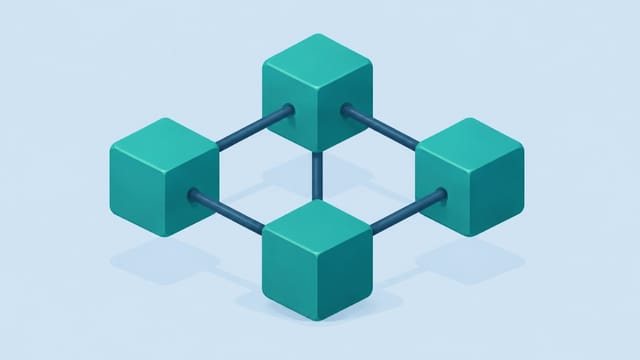
Layer 2 solutions add functionality to an existing blockchain. Think of them as infrastructure built on top of the underlying chain, using its structure for security and validation.
The main goal is faster and cheaper transactions. Early blockchains like Bitcoin and Ethereum have long faced scaling problems. When demand spikes, transaction fees and confirmation times rise sharply. Layer 2 solves this by scaling the chain so more people can use it without those bottlenecks.
The first Layer 2 networks emerged between 2015 and 2017, including Lightning Network (Bitcoin) and Plasma (Ethereum). Wider adoption came later. By 2021 and 2022 these networks had reached production and serious traffic.
Common Layer 2 Networks for Bitcoin and Ethereum
The most established Layer 2 networks live in the Bitcoin and Ethereum ecosystems. For Bitcoin, Lightning Network is the clearest example. It matters for players who want faster, cheaper deposits at a Bitcoin casino.
Ethereum hosts several Layer 2 networks: Arbitrum, Optimism, Base, and zkSync. The choice of network is therefore important when playing at an Ethereum casino, because deposits and withdrawals have to use a network the casino actually supports.
Examples:
- L1 Ethereum: Arbitrum, Optimism, Base, and zkSync
- L1 Bitcoin: Lightning Network
Benefits for casino players:
- Lower transaction costs
- Faster transactions
- Inherited security from L1
The Tech Behind Layer 2, Explained Simply
The technical approach varies between Layer 2 designs. A few common categories:
- Rollups. Multiple L2 transactions are bundled and validated together as a package on L1. Depending on the design, the data appears on the L1 chain in different forms.
- State channels. Multiple L2 transactions happen off-chain. They are aggregated and then settled on L1. In some designs, only the summary appears on L1.
- Sidechains. Sidechains are technically not L2 in the strict sense, but they serve a similar function. They are independent blockchains that run alongside the main chain. They have their own consensus and validate transactions inside their own network. They connect back to L1 through a bridge.
A simple analogy: Layer 2 compared to a payment app
Think about how a peer-to-peer payment app works. When you send money to a friend on a different bank, the money shows up in their account immediately.
The clearing between banks happens later, often once a day, when it gets logged in every system. The payment app is a layer on top of the underlying banking system, using the security of the system below it.
Same Name, Not Always the Same Network
When an L2 network exists, the cryptocurrency typically keeps the same name as on L1. So bitcoin can be held on the Bitcoin blockchain or on Lightning Network. Ether can be held on Ethereum or on Polygon. These are expected to have the same value across chains, but they are not literally the same coin under the hood.
For that reason, never send Ether from L1 to an Ether address on Polygon. The funds can be lost. A swap or a bridge transfer has to happen first, so the coins end up on the same network as the destination address.
Sending crypto on the wrong network is one of the most common ways players lose funds at crypto casinos. Always confirm the network in both the casino's deposit screen and your wallet before you send. There is usually no recovery option.
This matters most for deposits and withdrawals at casinos that support both L1 chains and L2 networks.
(The payment app analogy applies here too. You cannot send money from a regular bank account directly into the payment app's internal balance. Money only moves inside the same system.)
How Layer 2 Shows Up When You Play at a Crypto Casino
Play at decentralized casinos and other blockchain-based casinos is affected in several ways when a player picks an L2 network. The clearest impact is at deposits and withdrawals, and in some cases gameplay itself.
Cheaper Deposits With the Right Network
When you deposit cryptocurrency to a casino, you pay a transaction fee on the chain that handles the coin. Under heavy load, that fee can be high on an L1 chain. Switching to an L2 cuts the fee meaningfully. At one point in 2026, the same transaction cost looked like this:
- Bitcoin blockchain (L1): $3.52 for the fastest transaction
- Bitcoin Lightning (L2): $0.05 for the fastest transaction
For a player who wants to use Bitcoin at a casino, sending through Lightning is the obvious way to keep deposit fees down.
Faster, Cheaper Withdrawals (Check the Casino's Terms)
Withdrawals can also carry a transaction fee, partly to cover the cost the casino pays to send the cryptocurrency to an external wallet. It is also common for casinos to set a higher minimum withdrawal on Bitcoin or Ether (Layer 1) than on equivalent L2 routes. A typical setup:
- Ether: minimum withdrawal $10
- Ether on Polygon: minimum withdrawal $1
Gameplay at Decentralized Casinos
Most crypto casinos handle deposits, withdrawals, and Provably Fair verification through blockchains. The gameplay itself runs on a central server the casino operates. That means each in-game bet does not have to be recorded on a blockchain.
In that setup, the gameplay feels the same as at a traditional casino.
Block Time Becomes the Bottleneck
At fully decentralized casinos, gameplay is directly shaped by the chain or L2 network in use. Each bet has to be recorded as its own transaction in a separate block.
| L1 Ethereum | L2 rollup | |
|---|---|---|
| Block and validation | Every single transaction has to be validated in a block. | Validation on L2. Multiple transactions per block on Ethereum. |
| Wait time | Several seconds to several minutes | Usually instant |
| Gameplay feel | Bugs and stalls are noticeable | Smoother gameplay |
| Cost | Expensive | Significantly cheaper |
These differences mean L1 play mostly suits slow game formats with few transactions per session. Some poker variants are a fit. Even there, the higher transaction fee remains a downside.
On L2, user experience improves substantially because of faster, cheaper transactions. That matters for anything fast-paced like video slots.
Risks: Wrong Network, Bridges, and Technical Failures
Even though L2 networks bring lower costs and faster transactions, some players still prefer Ethereum (L1). The reason is mostly perceived security and trust risks tied to the more complex L2 designs.
L2 networks have historically been criticized for not being as decentralized as Ethereum, and for shipping with bugs, especially in newer designs.
Should You Avoid Layer 2 at a Crypto Casino?
No. In most cases Layer 2 is a good choice because it lowers costs and speeds up transactions. The right move is to stick with well-established networks that both the casino and your wallet support clearly. Always confirm the network is correct before making a deposit or withdrawal.