





Crypto casinos are generally less regulated than traditional online casinos that hold licenses from major regulators like the UK Gambling Commission or the Malta Gaming Authority. The trade-off is wider choice, easier access, and stronger privacy. In this guide, our team walks through the factors that affect your safety as a player, plus what you can do to play more safely.
Checklist: 5 ways to play crypto casinos more safely
Pick crypto casinos that have been around for several years, have solid user reviews, and have been tested by independent reviewers. See our top picks for a starting point.
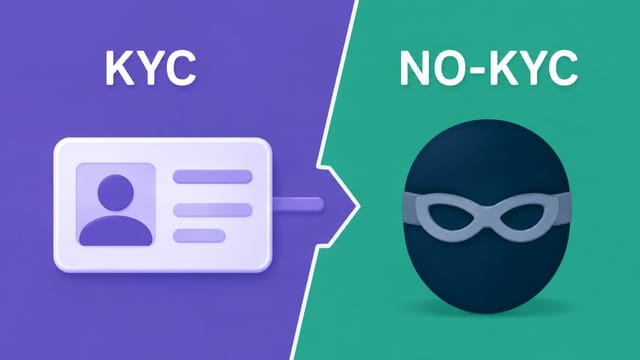
- Avoid KYC at registration where possible
- Limit the personal data you hand over
- Never connect your main wallet to a casino
- Keep only small balances on the account
- Withdraw winnings regularly
Offshore licenses on crypto casinos and what they actually mean
What sets crypto casinos apart, beyond crypto deposits and withdrawals, is the lighter licensing and regulatory framework. Some casinos hold no license at all. Others hold offshore licenses from places like Curaçao, Antigua and Barbuda, or Anjouan.
These licenses prove the operator is registered as a gaming business. They do not necessarily mean active oversight by a strong regulator, and they do not guarantee the kind of consumer protection you would get from a top-tier license like the MGA.
Check the casino's track record: years online and Trustpilot
A license is a plus, but on its own it offers limited safety. Check how long the site has been operating and what other players say on platforms like Trustpilot (for context, our team monitors each casino's Trustpilot rating and updates it automatically every day in our reviews). For example, BC.Game launched in 2017 and is now one of the bigger names in crypto gambling.
Uploading your passport or ID: what to keep in mind
Many crypto casinos ask for a copy of an ID card or passport before you can play, or before you can withdraw. The stated goals are blocking minors and reducing money-laundering risk.
But how safe are those documents once they leave your device? A clear example surfaced when a third-party provider used by Shuffle.com confirmed a data breach in October 2025. The attackers walked away with names, transaction history, KYC documents, and email addresses. The exposure of KYC documents was the most damaging part for affected players.
How to reduce KYC document risk on crypto casinos
If you play on casinos that do not require KYC, you sidestep the risk of your ID ending up in the wrong hands entirely. If a passport or ID photo is required for withdrawals, you can lightly redact non-essential fields (for example, blurring the document number) so a leak does less damage. Keep the face photo and full name visible, those are usually the parts the casino actually verifies.
Use a separate email address for the casino
Set up a unique email address used only for logging in and communicating with the casino. That way, if the casino is breached, the leak does not link back to your main inbox or any other account.
“All the data I upload could leak someday. Am I okay with that?”
How KYC really works on crypto casinos: usually triggered at withdrawal
Plenty of crypto casinos advertise that no KYC is required. To start playing, you only register an account with a username and deposit Bitcoin or another crypto.
What is less obvious is that KYC is often required when you want to withdraw. In practice, that means uploading a copy of an ID card or passport before winnings can be paid out. Some casinos let you withdraw a few times, or up to a certain limit, before KYC kicks in.
Play with small balances and withdraw winnings often
Keep balances small and withdraw frequently. That way, you can confirm the cashout flow works without being forced into KYC. Avoiding large balances is a sensible rule on any casino, since funds can be lost if an account is suspended.
Scams on crypto casinos: how to spot a fake
Like any other online sector, crypto gambling has its share of scams. A common pattern is a site that looks like a legitimate casino but pushes you to connect MetaMask or another wallet to “sign in”.
In some cases, you can transfer crypto to the platform but no actual gameplay loads. In others, the site attempts to drain the connected wallet through opaque transaction approvals.
Never connect your main wallet to a casino
Do not connect your main wallet to a casino. Use a separate hot wallet just for casino play, or send crypto to the deposit address shown inside the casino instead of using a wallet-connect flow.
The same principle applies to anything else built on smart contracts. For NFT trading on OpenSea or DeFi lending on Aave, use a wallet that is separate from your long-term holdings.
Problem gambling and age limits: lighter safeguards on crypto casinos
Another safety angle is how a casino handles problem gambling, both proactively and once a player gets into trouble. In other words, whether responsible-gambling tools exist and actually work.
Crypto casinos vary, but as a category they tend to offer fewer controls than traditional licensed sites. Their licenses simply do not impose the same requirements around deposit limits, time limits, and self-exclusion.
Set your own time and money limits before you play
Set your own rules. Decide how long you will play in a session and how much you can stake per round. For more concrete advice, see our guide on responsible gambling.
Technical risks on crypto casinos: when the code runs the game
If you play on a decentralized casino, every action is executed by smart contracts. The way those contracts are written determines both how the game works and how safe your funds are. For most players, auditing a smart contract for security flaws is not realistic.
There are also documented cases where weaknesses in smart contracts were discovered and exploited.
Test with small transactions before depositing more
Treat smart-contract casinos like any other on-chain product. Send a small test transaction first, check that it behaves as expected, then scale up. Ideally, deposit, play, and withdraw within the same session, so larger amounts are not stuck on a contract you may want to leave later.
Bottom line: the biggest risks and how to play more safely
Crypto casinos sit under far less regulatory pressure than traditional online casinos. That cuts both ways. On the upside, you can play with crypto, and the experience is largely operator-driven rather than dictated by national rules.
The main downside is weaker safety overall. That covers consumer protection, exposure to hacks, and how ID documents are handled.
As a player, you need to be aware of these trade-offs and lean toward casinos with a long track record and a positive reputation. The most important rule, as always with any casino, is simple. Do not play with more than you can afford to lose.
Online gambling laws vary by jurisdiction. The legality of using crypto casinos depends on where you live. Check your local rules before signing up. Gambling involves risk. Play responsibly. 18+.