





Crypto casino login usually means a choice between several methods. Most operators let you register and sign in with email and password, a crypto wallet, WalletConnect, or a third-party account such as Google. We walk through how each method works and where each one falls short.
Email and password registration: the classic method
Email and password were once the only way to open an account at an online casino. They are still common, but most crypto casinos now offer them alongside several other login options.
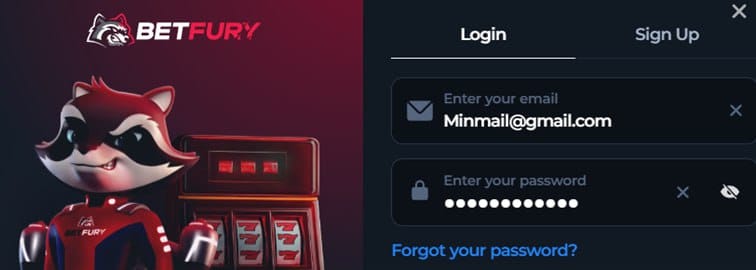
How email and password sign-up works
To register with email and password, you enter both during the sign-up flow. The casino usually emails you a confirmation link, and in some cases a verification code that you have to type back into the form. This is a security step that proves you control the address. Once it goes through, your new casino account is tied to that email.
Logging in then uses the same email and password. Some casinos require two-factor authentication on top of that. With 2FA on, an email and password alone are not enough. A one-time code arrives by SMS or email at every login, and you have to enter it. That stops anyone who has only your password from getting in.
One-time code (OTP) login: a passwordless option
A variation on email login skips the password entirely. Instead of choosing one at sign-up, you enter your email at every login. The casino sends a single-use code (typically valid for around 10 minutes) and you type it in to authenticate.
Pros:
- Simple. Email and password are quick to enter on any computer or phone.
- Easy password reset. If you forget your password, recovery is straightforward as long as you still have access to your email.
- Easy to share. Want to bet on a betting site but you are away from your usual device? Login details are easy to pass on, which some users see as a benefit. Keep in mind that sharing accounts usually breaks the casino's or sportsbook's terms.
Cons:
- Vulnerable if your inbox is hacked. Anyone who breaches your email can reset passwords and log in to every casino account tied to that address.
- Can take extra steps. With 2FA in play, login is no longer one step. SMS-based codes also mean you have to keep your phone with you.
- Less secure overall. Compared with a Google account or a crypto wallet, email and password are usually the weakest of the available options.
Logging in with a crypto wallet: a direct browser connection
Several crypto wallets install as browser extensions. Through these, you can interact with crypto-native services like exchanges, casinos, and on-chain games.
How to connect your crypto wallet to a crypto casino
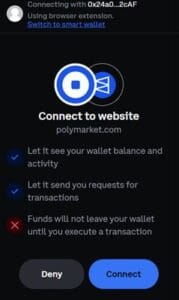
When you start creating an account, the casino shows which wallets it supports. Clicking the icon for, say, Coinbase Wallet activates the extension and prompts you to sign a request.
As the screenshot shows, the wallet has an Ethereum-based address (it begins with 0x24a0). After you sign the request, that address effectively becomes your username at the casino.
Logins after that work the same way. Each session you sign a fresh request, and the on-chain signature proves you control the address. This is not a transaction, so there are no network fees.
The account is tied to a wallet address, not a person. Whoever holds the keys, and can sign with that address, can sign in.
Pros:
- Decentralized. No company holds your login credentials, personal data, or anything similar.
- Anonymous. Blockchain addresses are pseudonymous, not directly tied to a real-world identity. Bear in mind that all transactions are public.
- Easy transfers. The same wallet handles login and crypto deposits and withdrawals.
Cons:
- No backup. With a password you can usually click “Reset password” if you lock yourself out. Crypto wallets have no equivalent.
- More technical. Installing and using a browser-based crypto wallet takes some technical confidence.
- Risk of unintended transactions. A handful of malicious sites pose as wallet logins but actually request a token transfer once you sign. Phishing risk is higher here than with other login methods.
WalletConnect: secure login without exposing your wallet
WalletConnect is a communication protocol that links blockchain-based services to crypto wallets without giving the service direct access to the wallet itself.
The advantage is that WalletConnect cannot reach your assets the way a connected browser wallet can. It also cannot store your private keys. That makes it a useful safety layer if you would rather not connect your main wallet directly to a casino.
Step by step: connect via WalletConnect with a QR code or link
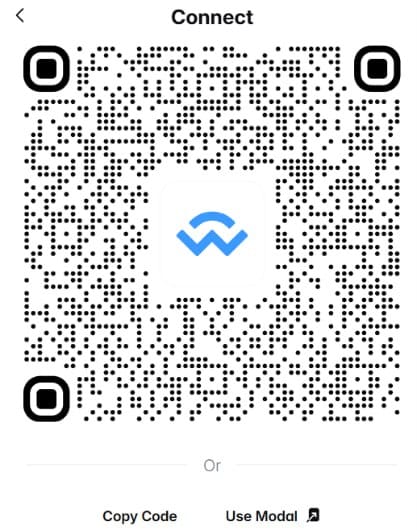
When you start registration, you pick WalletConnect and a QR code appears on your desktop. On mobile you get a tap-through link instead.
You then open a wallet that supports WalletConnect. Common ones include MetaMask and Trust Wallet. In the wallet you choose “Connect” or “WalletConnect”, scan the QR code or open the link, and approve the request. There is no transaction here, just a signature confirming you control the wallet. The casino account is now tied to that wallet address.
Logging in works the same way. The casino loads the account linked to your wallet address, and the wallet acts as identification without exposing private keys or letting any transactions slip through.
Pros:
- Safer than connecting a wallet directly. WalletConnect avoids some of the exposure that comes with browser-based wallets.
- Quick. Sign in fast with a QR code or link, without juggling 2FA codes.
- Anonymous. As with a regular crypto wallet login, you can play without sharing personal details.
Cons:
- Wallet required. You need access to your crypto wallet to log in. Email and password are more flexible.
- Not all wallets are supported. Compatibility with WalletConnect varies, which limits your choice of wallet.
- No recovery option. Lose access to the wallet and you lose access to the casino account. There is no “Reset password” path.
Logging in with Google, Telegram, or social accounts
Some casinos let you sign up and log in with a Google account or a social account such as Telegram. The casino delegates verification to that third party. The example below uses Google.
How third-party sign-in via Google or social accounts works
When you click “Sign in with Google” (or similar), a Google page opens for you to authenticate. If you are already logged in, you skip that step.
After you authenticate, Google asks whether the casino can access certain account details. You have to approve that for the option to work.

Your new casino account is now tied to your Google email and ready to use as a login.
After that, you sign in by picking Google as the login option. As long as you are logged in to your Google account, Google sends a digital token to the casino.
The token is proof to the casino that Google has authenticated you. Your Google password is never shared with the casino. That lets the casino link your account to a specific Google address without holding the credentials itself.
Pros:
- One password to remember. As long as you remember your Google password, you can reach a wide range of services through it.
- More secure. Google login is generally safer than a username and password chosen on the casino itself.
- Easy to manage. From your Google account, you can revoke access to services you no longer want to log in to via Google.
Cons:
- Dependent on Google. If your Google account is compromised, an attacker can also reach your funds at the casino.
- More traceable. Your Google account shows clearly which services use it for login, often with name and other personal details.
- Hard to migrate. Switching to a new Gmail address can be administratively painful when several services rely on it for login.
Online gambling laws vary by jurisdiction. The legality of using crypto casinos depends on where you live. Check your local rules before signing up. Gambling involves risk. Play responsibly. 18+.